


Finance for Biodiversity Foundation welcomes progress on incentive reform and transition planning, while calling for stronger national implementation of the Global Biodiversity Framework by 2030 .
Following intensive negotiations that concluded in the early hours of 31 October, Parties at COP17 adopted the Yerevan Pathway in response to the first Global Review of implementation of the Global Biodiversity Framework (GBF). The review confirms that the world remains off track to achieve its 2030 biodiversity targets. The Finance for Biodiversity Foundation welcomes the Armenian Presidency’s leadership and the agreement on priorities for accelerated national action.
Parties adopted nearly 50 decisions, demonstrating the value of multilateral cooperation. The Yerevan Pathway identifies priorities including reforming harmful incentives, aligning national budgets and economic decisions with biodiversity objectives, and strengthening implementation, monitoring and accountability. Implementation will determine whether these decisions deliver measurable progress by 2030.
With economic factors playing a critical role in achieving GBF goals, the Finance Sector had raised its voice in Yerevan to underline that failing to deliver an ambitious GBF implementation would increase the cost of inaction and exacerbate growing material risks of environmental and financial instability.
Political momentum on incentive reform and transition planning
Finance for Biodiversity Foundation and its community of financial institutions came to Yerevan with a call for key finance-related priorities to accelerate GBF implementation, all of which are reflected in the final COP17 decision texts. In particular, incentive reform has become a rallying call for the private sector. An open letter signed by 130+ businesses and financial institutions was delivered to nine ministers during the High-Level Segment, reinforcing the growing momentum behind this agenda.
The inclusion of Target 18 in the Global Review sends a clear signal that governments need to move faster in phasing out or reforming incentives that drive nature loss and redirecting public support towards nature-positive activities.

Anita de Horde, Executive Director of the Finance for Biodiversity Foundation, said:
“COP17 has given incentive reform new political momentum. We welcome the agreement to accelerate implementation of Target 18, alongside the growing coalition of governments taking leadership and the strong support of more than 130 businesses and financial institutions calling for reform. This sends an important signal that reforming harmful subsidies is not only essential for nature, but also for creating the right conditions for sustainable investment. The momentum is there. Governments must now turn it into concrete reforms that redirect public spending and unlock private finance for nature”.
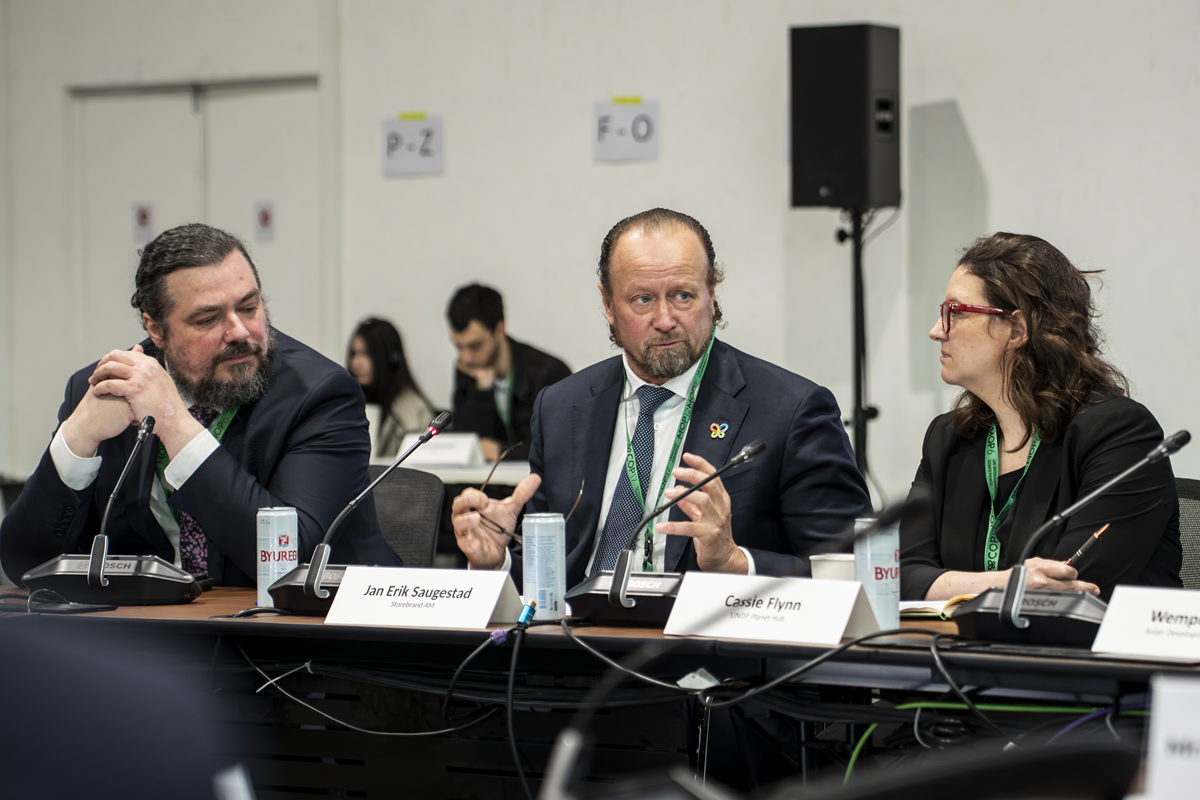
Jan-Erik Saugestad, CEO at Storebrand Asset Management, said:
“Ahead of COP17, more than 130 businesses and financial institutions, including Storebrand AM, called on governments to accelerate the reform of incentives that drive nature loss. The outcome in Yerevan is an important step forward. Incentive reform is one of the most effective ways governments can address the root causes of biodiversity loss, reduce nature-related risks, and create the conditions for capital to support a nature-positive economy.”
Another key priority for the finance sector is transition planning. The Mainstreaming decision adopted at COP17 proposes key tools to support this major dynamic: transition plans for businesses and financial institutions and sectoral alignment plans at the national level.
The Mainstreaming decision also includes language on authorities strengthening their mandates, including by integrating biodiversity into private sector disclosure frameworks.
Global Review decision tackles upstream issues of biodiversity loss
The Global Review decision calls for accelerated actions to address the underlying drivers of biodiversity loss, which is a key conclusion of the State of Biodiversity Action report. This is an important message for governments and private sector alike. Unfortunately, the associated ideas of economic and financial system transformation were not approved by the Parties, who could not commit to such forward-looking commitments. Transformative changes were identified as the elephant in the room.
Anita de Horde said:
“The Global Review sends a clear warning: implementation is not progressing fast enough, particularly on finance-related targets. We welcome the Yerevan Pathway as an opportunity to accelerate national action, but we would have liked to see stronger commitments on aligning financial flows with nature and reforming harmful incentives. Achieving the Global Biodiversity Framework requires not only mobilising more finance for biodiversity but also redirecting existing financial flows away from activities that harm nature.”
The decision addressing the implications of the IPBES assessments also offers opportunities to strengthen enabling environments for sustainable practices and the alignment of incentives and financial flows.
We will continue engaging with the CBD, governments and financial institutions to strengthen the practical implementation, monitoring and assessment of financial alignment with biodiversity objectives.
Other important messages for the finance sector in the Global Review include the importance of the whole-of-government and whole-of-society approach, as well as the importance of data for successful biodiversity monitoring and sound decision-making.
Growing role for the Finance Sector in Cali Fund operationalisation
The Cali Fund decision enables the operationalisation process to progress until COP18, notably on the allocation methodology, the legal certainty of certificates, and the structured approach. Language on asymmetries among users of Digital Sequence Information (DSI) keeps the discussion open on modalities based on products and services.
The Finance for Biodiversity Foundation, as an observer to the Cali Fund Steering Committee, remains engaged in supporting the Multilateral Mechanism on DSI & the Cali Fund operationalisation. The key priority is to build capacity to be able to mobilise the finance sector as a key stakeholder in this process. The FfB Investor Guidance on DSI launched at COP17 pursues this objective and will serve as an engagement tool.
Looking ahead to COP18 in Ecuador in 2028, governments will need to translate the Yerevan Pathway into concrete national policies and reforms, strengthen the enabling environment for financial institutions, and demonstrate measurable progress towards the 2030 targets.
FfB Foundation finance sector mobilisation at COP17
Finance for Biodiversity Foundation attended COP17 with a delegation of 40 finance sector representatives from 18 financial institutions. They expressed their ambitions, calling for policies enabling a biodiversity-driven financial system, and expressed a clear message calling for the reform of incentives, including during Ministerial events as part of the High-Level Segment.
Other key topics for the FfB delegation included calling for the successful establishment of the Tropical Forest Finance Facility, building on the Rotterdam TFFF Investor Statement, the development of a Finance for Nature Positive Framework with the support of the GEF Innovation Window-8.